A Career Story: Scott Hertel On Failure, Freedom, and Being a 3x Founder
Updated: Apr 8
Welcome to our series on career stories. EverMore believes reflection and storytelling are key to personal and professional growth. Meet our Cofounder + CTO, Scott Hertel.
You can also listen to Scott's full career story on the Dear EverMore podcast:
Tell us about yourself.
Hi, I’m Scott Hertel.
First and foremost, I’m a builder. I’m happiest when I’m building something. Anything. Whether it’s helping to forge a rock-solid fast pitch softball swing, helping to bring the Jamestown colony to life for my daughter's school project, or a complicated software project, any project with a building aspect quickly gets my attention.
I’m now a 3x entrepreneur. The latest venture is a career coaching platform named EverMore. In this effort, I’m fortunate to be joined by Kelsey Peterson and Courtney Branson, two talented industry veterans.
What career did you want as a child?
When I was a kid, I saw the movie Top Gun, and I dreamed of someday being a jet fighter ace. I gave up on the dream when the father of a childhood friend, and a former military pilot, told me about the demanding physical requirements. I have one eye that can’t be fully corrected, and he was kind enough to tell me that this would absolutely be a deal breaker.
What were the circumstances you grew up in, and how did they shape your view of work?
My parents were hard workers. I noticed this early on when they would get home late from work or bring work home with them. I also noticed this at home. My mother was always “on the go” and was rarely found relaxing. She was always the first to jump in and help a friend or neighbor. Over the years, she’s mentioned how she has had to discipline herself to not over-commit and burn herself out.
My father acted in similar ways, and he always reinforced the idea that, in business, you need to be providing value in excess of your compensation. Being of Scotch and German roots, he is also exceedingly frugal, and I’m afraid it rubbed off on me.
It’s striking to me how much you can accomplish with a bit of ingenuity. Necessity truly is the mother of invention.
When you think back to your very first job, what did it teach you about yourself?
Early on, I discovered I have an overdeveloped sense of fairness. Both in early jobs and later when joining the professional workforce, I was a keen observer of how rewards were doled out, when they made sense, and when they didn’t.
When I was in high school, I had a job working at a local grocery store. I got my first promotion, and my manager told me she had to fight the other two managers tooth-and-nail to promote me over a coworker.

It was my perception that this particular coworker, though a good person and likable, did not deliver anywhere near the value I did on a consistent basis. I would notice them being chatty and joking with the managers while I was hustling to keep the shelves stocked and maintain the inventory for the week ahead.
In this case, I was able to win out (with the help of a champion) what I perceived to be a biased view, but this wouldn’t always be the case, and certainly not the only time I observed personal biases at play in the workplace.
What was your experience entering the workforce?
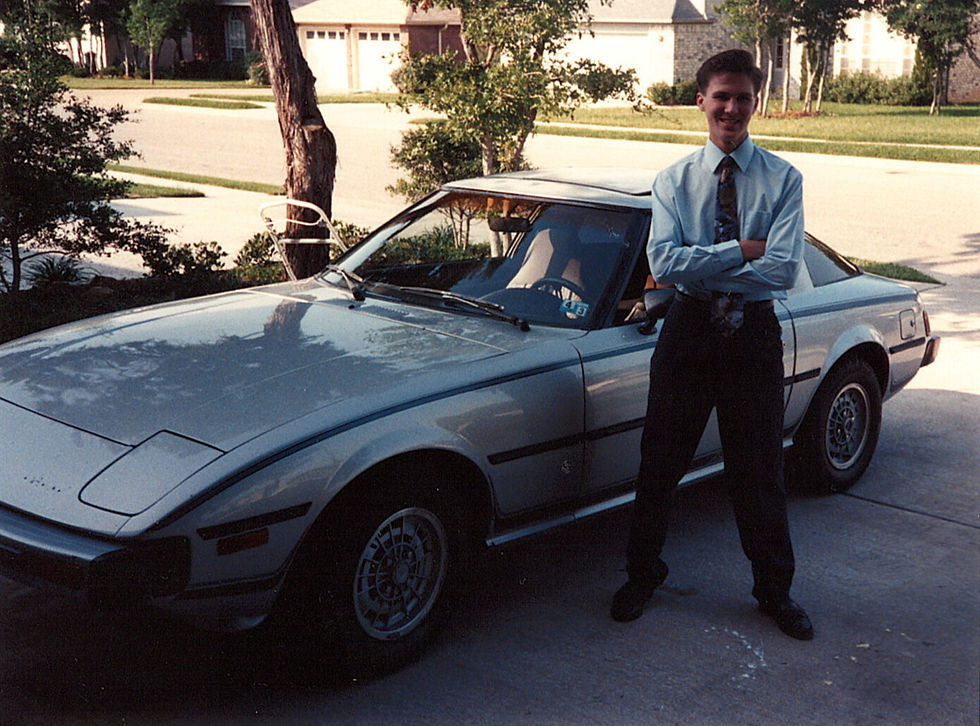
My first “professional” job out of college was with a systems integration startup headquartered in San Francisco during the dot-com boom. The feeling was that, due to the internet and other technological advances, we were in a fundamental shift in the business environment.
Money was sloshing around, and my peers and I thought it was normal for kids fresh out of college to be jet-setting around the country on high-profile gigs. Billing our clients for extravagant dinners, limos from the airport, and upgraded hotel suites was just how business was done.
For us, there was no context or recognition that we just might be in a bubble, and there would inevitably be a reversion to the mean. I learned so much during this time, but the biggest lessons came out of the downturn that marked the end of the boom and the lumps we all had to take as the least experienced members of this workforce.
Looking back, what was your first big career break, and how did it happen?
Looking back, that first job out of college was my big break. Despite the firm going bankrupt and all of my equity (of course, I was fully invested in the employee stock purchase plan) going to zero, they had a golden reputation in the industry.
In the following years, I definitely noticed doors being opened simply because I had this name on my resume.
Is there a moment of joy, pride, or surprise that stands out most in your career?
The first thing that comes to mind is being a first-time co-founder, building up, and then selling our first startup, MetaSaaS, to Flexera. It’s not the outcome we had planned for, but the rationale for merging with a more established player was solid, and the deal was accretive for our investors and employees.
Achieving a positive outcome after simply starting with an idea was just the best feeling in the world.
Who or what has influenced your career story the most?
The biggest influence on my career has been the scientific method applied to business. I’ve always been fascinated by the 'deep dive'—that moment where you move past consensus and start discovering countering viewpoints.
I make it a practice to develop a quick hypothesis and then immediately look for reasons to reject it. With recent technological advancements, research like this has moved from a time-consuming chore into a rewarding exercise that ensures I’m making decisions based on evidence rather than ego.
What skills or mindsets helped you grow the most in your career?
Being a consultant earlier in my career gave me exposure to a breadth of industries and business problems to solve.
Rather than being siloed as a pure software developer, I was able to join projects that were either strategic or cross-functional. Your typical developer is assigned to a team that aligns with a business function and works to make incremental improvements to that product set or business process. I was able to attach in limited engagements to serve a variety of companies and business needs.
This gave me a wider view of software development in different environments and how it can serve widely different business needs. For example, software development for an online travel startup is a different environment than developing a customer eligibility processing engine for a national health insurance company.
Can you describe a moment when your career path shifted—planned or unplanned?
After years “on the road” as a software consultant, I moved back to Austin to find some balance. I landed an Engineering Director role at a major company, but I quickly discovered that “stability” wasn't enough to keep me satisfied.
Increasingly, I found myself frustrated by the slow gears of corporate politics and realized I was craving a different kind of challenge. I decided to pivot entirely into the startup world. I didn't have a background in that space, but I had a desperate need to build something from scratch and be involved in every part of the engine.
It was a leap into the unknown that completely redefined my career.
Was there a moment when you felt like giving up or changing direction entirely?
When pivoting into the startup space, I spent some time at a couple of early failures. In both cases, it didn’t happen all at once, but I should’ve picked up on the signals. Furthermore, the probability of a successful outcome should’ve been obvious from the outset.
What I now know is that great ideas are unfortunately quite common. A founding team that has a clear direction, meets goals, and establishes a strategy and criteria for success is absolutely critical. Even then, startups are a risky proposition, and a million things can go wrong. The team has to be able to pivot and refine their approach when the situation demands.
These early failures had me questioning my own abilities and whether or not this path would ever be fruitful. I had to reflect back on these failures and identify the signals and patterns that I had missed, despite my optimism in the idea and the strengths of the founding team.
What were the biggest obstacles you faced in your career journey?
Ironically, what I feel is my biggest strength has also served as the biggest obstacle in my career. My training and background are in software engineering.
Engineers are prone to analysis paralysis. I like to have the perfect 100% correct answer to all questions and problems. This can result in difficulties in persuading others of your viewpoint or approach, as you tend to cast options available in terms of their chance of success.
I’m always aware that there are several paths to victory, and each path has its own benefits and drawbacks. People (especially business stakeholders) tend to like it when there is one solution that is full-throatedly endorsed.
What have been your biggest failures?
I'll answer this a little differently with things I learned how to do well the hard way.
Approaching my career with intentionality. What I mean by this is establishing goals and growth plans to achieve those goals. In addition, regular reflection on how your path is going and having a continuing honest assessment of where you’re at and how you’re progressing.
Seeking out mentors and having them invest in my career progression. The wrong mentor can provide bad advice and/or derail your progress. It’s not an easy task to find someone who a.) has the experience and ability to help in your current situation, b.) has developed a professional network to assist you in various ways, and c.) can provide honest, unbiased feedback on your strategies and plans.
What values have remained constant for you through different jobs or stages?
I’ve always sought out truly generative relationships and experiences.
So many companies tout your personal growth as a focus when they post a job opening and when you’re interviewing. After starting in a position and giving it an honest go, you often find out that this is just smoke and mirrors. I think the best situations always arise from win-win environments.
When interviewing candidates, I’ve always expressed to them that this has to be a “good fit all around”. This is more than just describing a two-way street. A growth-oriented position will outline multiple angles and justifications in the ways it can be accretive to both parties.
Did you ever feel pressure to conform to someone else’s definition of success?
Oftentimes, but I’ve also used this as a signal to start looking for other options and opportunities. There’s a delicate balance to maintain here, but when enough evidence piles up, it’s time to make a move.
How do you define success for yourself today?
Having been in the startup game for a while now, I tend to look at different signals. I’m always paying attention to the operational metrics and pondering how we can adjust our tactics and strategy to boost results. What features and capabilities can be built or improved upon to “shake up” the chessboard?
Revenue and returns (money) for me do not represent greed or a selfish motivation. For me, it’s a symbol of freedom—the freedom that allows you to invest in different ways and make different decisions.
Without appropriate capitalization, the moves available to you are greatly reduced. A cliché way of saying this is, “cash flow solves all problems."
I’m not necessarily a fan of Mark Cuban, but I think he’s right on when he characterizes cash flow as having the "oxygen" needed to fix every other mistake in the business. The more oxygen you have available, the more moves you can make. Of course, sometimes the right move is staying put, but at least you have the optionality available should the need arise.
If your career story were a book or movie, what title would you choose?
The Martian. I love this quote: “I’m gonna have to science the shit out of this.”
What’s your favorite quote?
"Everyone has a plan until they get punched in the face." — Mike Tyson
What books are canon for you?
Lord of the Rings trilogy.
Additionally, growing up, I always gravitated to anti-hero narratives. For example, I only read comic books like The Punisher, Wolverine, and Batman.
I dunno what that says about me!
What are you listening to right now?
I primarily listen to investing, technology, and VC podcasts
High probability you catch me geeking out to 80s new wave music
Where can we find you?
You can follow me on LinkedIn
Check out my User Manual on EverMore
Listen to the full conversation of Scott's story on "Dear EverMore"
Scott Hertel is a cofounder of EverMore, which is reimagining the future of work one reflection at a time. He's a 3x founder with deep roots in Engineering and startups. When he's not building EverMore, he's a girl dad and softball coach.